Behind Every Delayed Trial Is a Patient Waiting: Zach Taft on IgniteData’s Mission to Move Research Faster
Imagine this: a clinical research coordinator is sitting in front of a patient’s record, toggling between systems, reviewing hundreds of pages of documentation, and manually transferring key data into the format a sponsor requires. Now imagine much of that work already populated, with the coordinator no longer acting as a transcriptionist, but as a reviewer: confirming accuracy, moving faster, and spending more time on the people behind the data.
That kind of workflow shift matters because clinical trials run on data, and too often, the movement of that data is still painfully manual. Across hospitals and research sites, highly trained staff spend hours pulling information from electronic health records and re-entering it into sponsor systems, one field at a time. It is slow, expensive, and vulnerable to error. And when clinical trial operations get bogged down, the consequences ripple outward: timelines stretch, costs rise, and patients wait longer for potential new therapies.
That is the opportunity IgniteData is pursuing with Archer, its virtual research assistant for clinical trials. The company is tackling one of the most operationally complex and overlooked bottlenecks in clinical research: the flow of data between care delivery and study execution. For HealthX, that fit was clear. IgniteData sits squarely at the intersection of several themes central to the firm’s investment strategy, including data liquidity, clinical research infrastructure, and technologies that make healthcare operations more efficient and scalable.
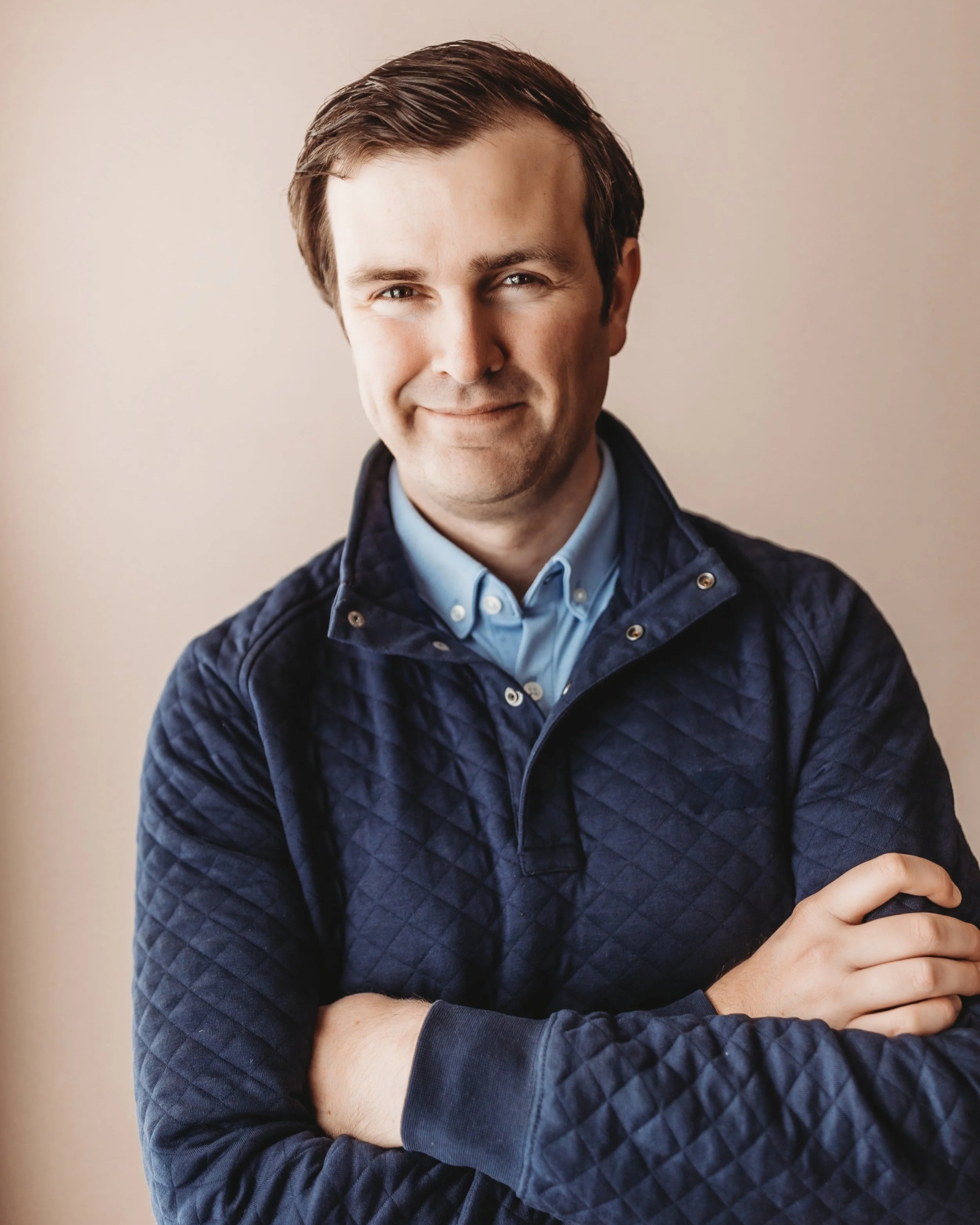
Leading that effort is Zach Taft, CEO of IgniteData. Zach came to the company after helping drive digital innovation at Memorial Sloan Kettering, where he saw firsthand just how costly and labor-intensive clinical trial data collection can be, and how much room there was to do it better. In this conversation, he shares what drew him to IgniteData, why this problem matters so deeply, how Archer changes the day-to-day reality for research teams, and what could be possible if clinical trials become faster, more connected, and more accessible.
You’ve had a front-row seat to healthcare innovation in a lot of different settings. What was it about IgniteData, and this particular problem in clinical research, that made you want to join as CEO?
ZT: I don’t have a background in clinical research or life sciences, so this was new to me. My background is in digital healthcare—actually, very similar to Mark Bakken’s. I was at a consulting firm that integrated front-end voice recognition into Epic, and we also did Epic staffing for go-live projects. I ran fairly close to Nordic and Mark during that timeframe.
I came to Memorial Sloan Kettering to help jumpstart its digital ventures program and look at how we could make MSK more innovative in AI and digital healthcare, while also becoming an asset to the principal investigators across the organization.
That’s when I got pulled into the challenge of how to make clinical research more efficient and effective using technology. I was shocked when I found out how much MSK spends each year on the manual movement of data out of EHRs and into electronic data capture systems, or EDCs. The estimate put in front of me was $100 million, which is a huge spend.
Then I found out it wasn’t just MSK. Pretty much every organization on the planet was spending something comparable. I was shocked that nobody had solved it yet.
So we started looking at companies that claimed to solve it. Nobody had. The challenge is that healthcare systems are the ones using this technology, but they’re not the ones paying for it. The ones who pay for it are life sciences companies like J&J and AstraZeneca. So none of the products were actually designed for the end user.
We found this company out of the United Kingdom called IgniteData that had done a pilot. They weren’t generally available yet as a product, and they were looking for a development partner. We were able to incubate it at MSK. Then the founders asked if I’d be interested in coming on board as CEO.
It’s an amazing environment to work in, with amazing people. I love the company. I jumped in headfirst.
For someone outside the clinical trials world, can you paint a picture of the problem Archer is solving? What does the old workflow actually look like inside a hospital or research site, and where do things break down?
ZT: Great question. There are a lot of places where Archer helps. This is such an antiquated industry in the way things are done, because there is a lot of money involved and things have to be done perfectly, which is unique.
If you miss billing and coding, it’s really not that big of a deal. But if you’re not 100% accurate in the way you’re capturing and reporting data, it can delay drug development, increase costs, and decrease patient care and quality of care. So you have to get it right.
Archer helps in two main areas. The first is that it’s very expensive to conduct a clinical trial, and part of that is because the data has to be 100% accurate. You have to review the data, confirm the accuracy of the data, and oftentimes that requires people to physically go on site. There are very few organizations in the world that have the manpower to conduct clinical research and clinical trials. MSK is a good example. MD Anderson, Mayo, City of Hope. If you look across the world, there are other centers of excellence, but if you’re a patient who doesn’t live in one of those environments, getting into a phase one or phase two clinical trial is really tough.
I’m from Cincinnati. There is not a comprehensive cancer center in the city of Cincinnati. I had a family member who was diagnosed with cancer and actually had to move to New York to seek the kind of treatment they needed, and is ultimately in survivorship. But without that kind of connection, that wouldn’t have happened.
So Archer is trying to solve for bringing economies of scale to the way clinical trials are conducted by decreasing the human involvement required to run the trial from a data and logistics standpoint. That’s number one.
Number two, for these organizations, it is incredibly labor intensive to go into the medical record, review 1,000 pages of clinical documentation that was not actually documented for clinical research purposes, but for patient care, and then put that into a unique format that each sponsor does differently, while making sure the data is accurate.
That’s where the $100 million in spend comes in at MSK: 400 people whose job is the manual transfer of data out of the EHR and into the EDC. There are many organizations that just can’t afford that. They don’t have that pool of labor, and that pool of labor doesn’t really exist.
Because Archer is automatically going into the medical record and pulling out the data required for clinical research documentation on the sponsor side, you don’t need as many human beings to do it. So if we can reduce that by 75%, MSK doesn’t need 400 people doing it. They only need 100. That frees those employees up to focus on really high-quality work, like patient care and navigating patients through what is an arduous process of seeking cancer care.
Can you walk us through a real-world example of how Archer changes the day-to-day experience for a study coordinator, investigator, or research nurse?
ZT: The workflow is, in essence, the same. The best analogy I can think of is Apple Pay. When you go into Amazon or one of these online sources and purchase something, your information already flows into all the forms: your first name, middle name, last name, street address, state, ZIP code, credit card information, expiration date, the security code that goes with it. All you have to do is confirm the information is accurate and hit send.
And when it doesn’t fill something in accurately, you can manually go in and make sure the area code gets in there because it’s not properly formatted, and then you hit send. So your workflow doesn’t really change. It’s just that the amount of manual data entry required to ultimately get where you want to go gets faster and easier for you.
It’s the exact same thing here. When a clinical research coordinator is in the process of moving and extracting data out of EHRs like Epic, Archer has connections into the medical record and is pre-populating the forms with the data we believe is accurate. So as the clinical research coordinator, you’re no longer doing the entry itself. You’re confirming the accuracy of the entry, and it’s already in the format the sponsor wants.
So instead of being a transcriptionist and a data formatter, you’re a reviewer, and then you hit send.
It usually takes somewhere around five minutes per data point, which has been published: five minutes per data point for a clinical research coordinator to find the data in the record and then enter it into the EDC. On average, it drops to less than 30 seconds. So it’s much more efficient, and it’s much less burdensome on the CRC.
It’s in the workflow, it’s pre-populating, and then they hit send once they’ve confirmed the accuracy. So it’s much easier. It’s much more effective. And again, it allows the clinical research coordinator to focus on patient care and less on being a transcriptionist.
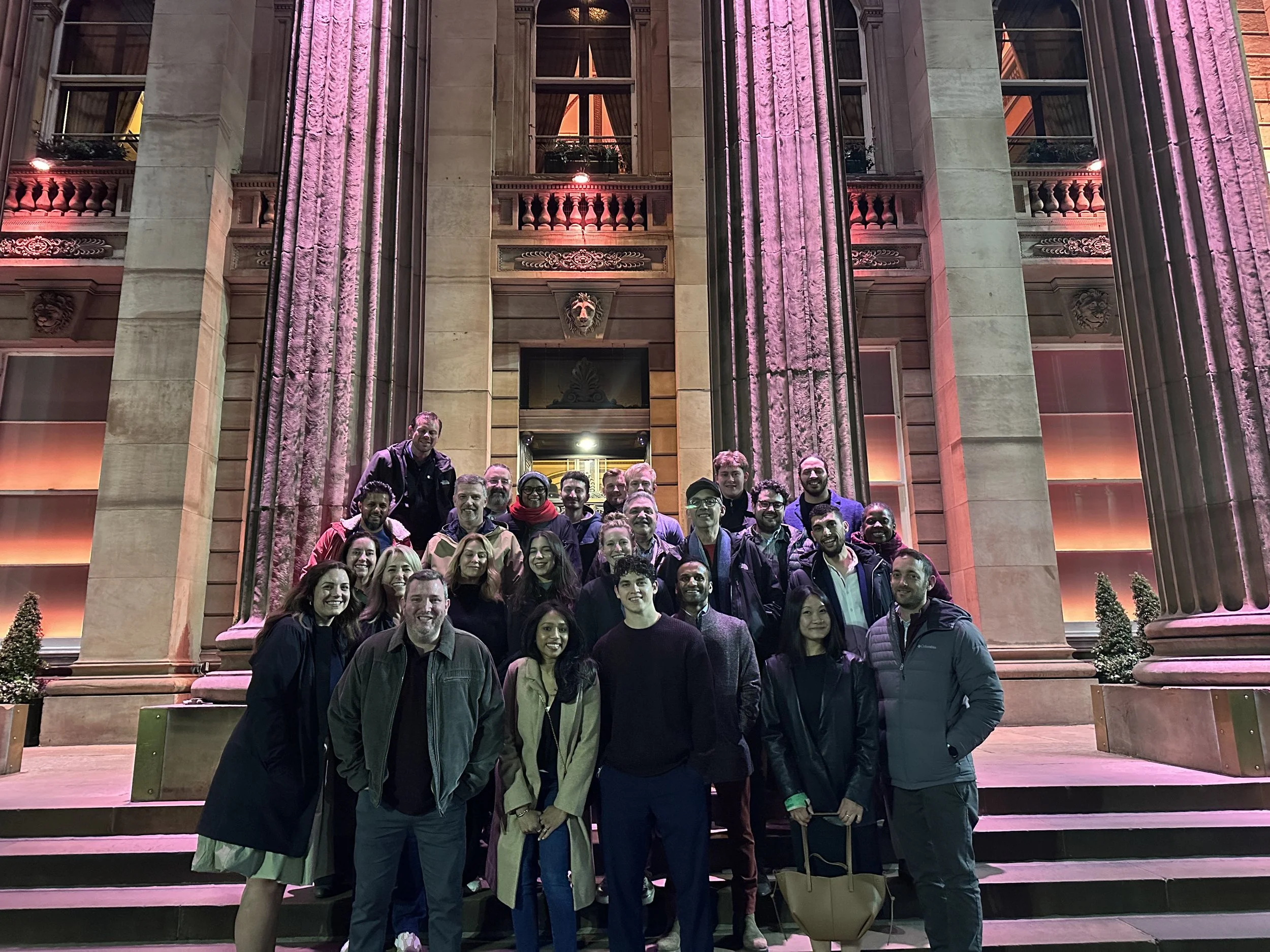
Photo: IgniteData Team
IgniteData sits at the intersection of hospitals, sponsors, and research technology vendors. Why has that interoperability layer been so hard to get right in clinical trials, and why is the market finally ready now?
ZT: Great question as well. It’s very interesting. Over the last decade or two, there have been recent laws and guidelines between Meaningful Use Stage One and Two and the HITECH Act that mandated the electronic capture of data for clinical care in the United States. So now we’re capturing data electronically.
That is not the standard throughout the world, by the way. A lot of the world still uses paper charts. That’s number one.
Number two, TEFCA was launched around the requirement for data interoperability. It used to be that the EHR companies effectively owned that data. They didn’t have to allow the free movement of that data between organizations or between sites. The U.S. government has now mandated that. Again, that’s something unique to the United States.
We’ve also settled on a standard for how that data can be accessed between sites, and it’s called the FHIR standard: HL7 FHIR. That, over the last six to eight years, has allowed organizations like IgniteData to build a middleware, what I like to call the connective tissue between organizations or between technology stacks.
As that has become mandated, and as more data is now FHIR-enabled, it makes it easier for us to capture that data. So just being able to get access to the data was a really big step.
Now that we’ve got access to the data, the next challenge is that every organization captures data a little bit differently. I like to use MSK as an example here because it’s New York City. MSK sits on the Upper East Side on York Avenue. Across the street from MSK is another very prestigious hospital, Weill Cornell. Even though it’s across the street from MSK, and a lot of physicians and labs bounce back and forth, the way data is captured at those two organizations is actually vastly different.
The way a lab result at MSK is reported compared to Cornell is different, and that data all has to be harmonized into a homogeneous data set as you’re submitting it to the FDA. That is incredibly laborious. And nobody, except for IgniteData to my knowledge, has found a way to transform that data in flight to allow it to come in in a harmonized way.
So to summarize, it’s two things: the ability to get access to the data, and then the ability to create a homogeneous data set from data that has been captured not just across the United States, but across the world.
HealthX is deeply focused on the operational realities of healthcare and on turning fragmented data into something usable. What made HealthX the right partner for IgniteData at this stage of growth?
ZT: I met Laura in February of 2025, and she has been in the life sciences industry forever. She’s been with Advarra and Forte, at Epic, and she’s looked at 5,000 companies since her time at HealthX. We were introduced through a mutual connection, and within five minutes of talking to Laura, she completely understood the challenge IgniteData is attempting to solve. She also completely understood why we’re solving it the way we are.
She has done a number of TEDx talks on why it should be done this way: if the end user is the site, you need to be site-focused, even though they’re not the ones paying for it. So having an investor who intrinsically understands what you’re trying to do, has lived it, understands why you’re doing it that way, and is supportive of it—you can’t buy that. That’s incredibly helpful.
So for one, I knew she was the right person to talk to and to look to for guidance and advice. Then, knowing Mark and his background in this industry: he’s been there and done it. He’s an entrepreneur. He’s had to make the fight. As an entrepreneur myself, and as a CEO doing a startup, having somebody who’s been there and done it and gone through those trials, having that guidance and advice is incalculable. You have bad days, and you need somebody who’s been through it.
It’s like boot camp. Explaining boot camp to somebody who’s never been through it is impossible. But having somebody who has been through it, there’s an instant connection, and there’s a camaraderie that comes with that.
So from our perspective, HealthX, along with many of our other investors, is a key component of why we’ve been successful. Even before HealthX made the investment, Mark and Laura had been incredibly helpful with guidance, advice, and frankly, mentorship.
When you look at investors, it’s not just about getting money, doing quarterly reports, and hoping they don’t get mad. It’s about asking: how can this be a force multiplier for the way we’re trying to go to market?
For me, it’s an understanding of the market and how best to attack it. I get that from Laura. It’s how to build a product that is going to solve the problem here. Laura does that as well. It’s the rocket ship that is a startup and the challenges you have to navigate. That’s Mark. And then it’s the connections throughout the industry. Both of them are so well connected and are more than willing to make introductions and support those introductions, not just make an introduction and then disappear, but help you extract the most value you can for both parties, which is just massive.
And to bring my joke home, when you’re at SCOPE or one of these conferences—ASCO, SCOPE, ACDM, whatever it is—you should see Laura’s calendar. It is packed from 8 a.m. until 10 p.m., and often double booked. She walks through these conferences like she is Barack Obama walking through the Democratic Party. Everybody knows her. Everybody wants to talk to her. Nobody can get enough time with her.
That kind of validation in the industry—that she’s willing to advise us, but also invest capital into us—again, that’s instant trust and instant credibility you just can’t get. And it’s the same thing with Mark on the digital healthcare side. Knowing that Mark is invested in us gives us a lot of credibility.
When you think about the long-term mission, what does success look like five years from now? What will be meaningfully different for research sites, sponsors, and patients if IgniteData wins?
ZT: When IgniteData wins, success is bringing economies of scale to the way clinical research is conducted. If we can do that, it solves so many problems in this industry. It’s an exciting opportunity, and it’s incredibly rare to be at an inflection point like this with something that can have such tremendous impact.
So success for us is this product becoming the connective tissue between tech vendors, sponsors, and clinical research sites, whether that’s big academic medical centers like MSK and MD Anderson, or local clinical research sites in communities across the globe, and moving as close to 100% of the data accurately, every time, as possible within five years.
What that means for sponsors is that they’re getting data faster and cleaner, so they don’t have to spend as much money on data collection and on what it takes to run a clinical trial. It also means drug development moves faster, which brings costs down and makes it possible to bring novel therapies, therapies that actually save people’s lives, to market faster and more broadly.
For sites, it becomes cheaper and easier to conduct clinical trials, which means they can potentially bring more clinical trials to their patients, and bring them faster.
The other component is that not every organization is an MSK. So for places like Cincinnati or Louisville, Kentucky—areas that may have big academic medical centers, but not comprehensive cancer centers—there’s no reason they shouldn’t be conducting these clinical trials. If we’re able to make it easier to run clinical trials outside of the big AMCs, then we can create more access to care. People who aren’t as fortunate as my family member was to go to New York can still get access to that care. We’ll be able to disseminate more clinical trials out into the industry.
For patients, it’s twofold, arguably threefold. First, if you’re not in a major metropolitan area, you could still get access to this care, because we can bring it into the community market. Life-saving treatments can come to where you live, which makes it easier to participate in a clinical trial.
Second, you’re getting therapies faster, because the complexity of clinical research goes down and the timelines shorten. It becomes easier for an FDA-approved drug to get to market.
And then the third is international. If we’re able to bring in more patients, that means we have more diversity in clinical trials, which means we have more data on how a therapeutic impacts people. And the likelihood of you being on the right drug, one that’s not going to have negative adverse reactions for you, just goes through the roof.
So it’s really cool to be the CEO of a company that can have such a huge impact.
To round out the answer, my mom passed away from cancer when I was three years old. That’s why I do what I do. My mission, since I was six years old, has been to make sure no three-year-old ever has to lose a parent again, and no parent ever has to lose a three-year-old because they have incurable cancer.
If we can bring therapies and clinical trials to people who normally wouldn’t have access, that matters deeply to me. When I think about ultimate success, it’s this: if we as a business can save one person because we were able to disseminate a clinical trial more widely, or bring a therapeutic to market more quickly, that to me is absolute success.
The monetary side is an afterpiece. The first piece is the common good we’re bringing.
Is there anything else you want to add?
ZT: One thing I’ll add is the team we have at IgniteData, and I think that’s where HealthX comes into play as well.
This team is incredible. Most, if not all, of the employees probably shouldn’t be at a company of this size. We’re lucky to have them, because they’re all incredible. If I were to get hit by a bus today, the company would be perfectly fine, because there are so many A-players on this team. We’re lucky to have them.
I think it’s the mission that has brought them here, and it’s the team that we have that makes this place so special.
What makes the team so incredible is that it’s not just the people employed by IgniteData. It’s also the team around IgniteData, whether that’s advisors from healthcare systems or sponsors, investors like SpringTide and HealthX, or people who are just genuinely interested in the business and willing to help out.
I want to make sure that’s a core piece of the story. It’s all of these pieces coming together as a singular team with a shared mission, vision, and values that I believe will make IgniteData successful over the long term, as opposed to it just being one singular person who’s supposedly amazing and can execute on anything because their reputation precedes them.
Learn more about IgniteData at ignitedata.com.