
Helping Patients Carry Their Health Story With Them: Kaitlan Baston on Building Vinyl Health
Imagine this: You leave a doctor’s appointment with a new medication, a few next steps, maybe a referral, and a vague sense that something important was said—but you can’t quite remember what. Your partner asks how it went. Another specialist needs your history. A family member wants to help. Meanwhile, the information you need is scattered across portals, printouts, visit summaries, and your own memory.
That is the problem Vinyl Health is aiming to solve.
Vinyl is a personal health assistant designed to put people back at the center of their own healthcare. The platform helps patients record visits, organize their health information, understand what comes next, and securely share the right details with the right people—whether that is a provider, a care partner, or a loved one who simply needs to stay in the loop.
HealthX recently invested in Vinyl, reflecting our conviction in the company’s mission to make healthcare work better for people while also making life easier for providers. At a time when patients are expected to navigate increasingly complex care journeys, Vinyl is building a tool that gives people more control over their own health story.
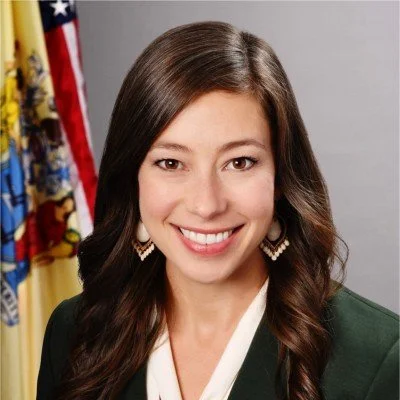
To learn more, we spoke with Dr. Kaitlan Baston, CEO of Vinyl Health. Kaitlan is a primary care physician, former health commissioner, patient, and mom who has spent her career thinking about how to close gaps in healthcare access and help people better understand their options. In this conversation, she shares what led her to found Vinyl, why personal health records need to be easier to use and share, how the platform helps families and care teams stay connected, and why HealthX was the right partner for this next stage of growth.
Can you tell us about your background and what led you to start Vinyl Health?
KB: I’m going to start at a place that feels like it’s way, way back, but I think it’s important because it’s who I am.
I grew up in rural Appalachia in southeast Ohio, and I have family members who are doctors. I saw what can happen when people have really good relationships with their doctors. I also saw health disparities from a very early impact lens. I saw people struggling with poverty—just a lot of poverty—and really struggling with not having access to what they needed in healthcare.
Then, from the time I did my master’s degree in London to medical school in Philadelphia, I ended up in cities and witnessed those disparities in an urban setting as well. I was already very dedicated to equity in healthcare and getting people access because of my rural background, and then I saw it in the urban setting too.
I ended up trying to do a lot of global health work to get that global perspective. My whole career, I realized there is so much we can do to try to close these gaps in health disparities. Initially, I thought, “Okay, I’m going to put all my energy into some of this global health work,” including work I did in Rwanda and the Dominican Republic and some of the other places I traveled. But continuing to watch it in the U.S., I realized pretty quickly that I could have an entire career just doing it here.
Unfortunately, even though we have a ton of resources, people still don’t have access to what they need. That ranged from my neighbors, who actually weren’t struggling with poverty, to people who were. A lot of people just aren’t accessing what they need in healthcare.
That really led me to wanting to be a primary care physician and try to meet people where they are and do that work on the ground. But as soon as I started my work in primary care, I realized I couldn’t work in the system without working on the system, because it was too broken. So I’ve been working on building systems that work better for people from day one.
Was there a specific moment when the need for Vinyl became especially clear to you?
KB: As a working primary care doctor, and then going from that to being the health commissioner, in both settings I saw this power dynamic. People really didn’t always understand what was going on, and a ton of my time was being spent trying to help people understand.
My job is to help you understand all of your options. You’re the CEO of your body. I am your consultant. I’m here to make sure you really understand, to give you all the information and trusted information, and then you get to decide what you want to do with that—what’s best for you, your body, and your family.
It would take more minutes and more hours than I had. I couldn’t replicate enough of me to actually get that done for people. I was constantly trying to help explain and sit there with people.
And as both a primary care doctor and a health commissioner, where you’re looking at all of public health, it’s not just what I’m teaching you as your primary care doctor or trying to be there for you. It’s also all of the specialists you’re seeing. It’s all the other parts of your health—your food, your daily health, your life, how you’re living, your walking. All of that has to get integrated too.
So we needed a tool that actually did this for people who didn’t necessarily have me as a doctor friend to call to help explain things, or a family member or another friend they could tap into. Everyone deserves to have that level of expertise in their pocket.
One of the ideas behind Vinyl is giving people more control over their own health record. What does that control look like in real life?
KB: It looks like, number one, having it in a single place. Not multiple different portals, not printouts, not CDs of an image that you’re carrying somewhere—having all of it in one place, but making it super easy to tap into.
Number two, it’s the ability to share that when you go to a new provider, or when you’re seeing somebody who you want to have a snapshot of who you are. Being able to share it with the click of a button.
Number three, it’s being able to unshare it. You are truly in control when you can say, “Hey, take a look at this,” or, “I’m going to pull this back.” Maybe you want to share something with a family member, but then you decide, “Okay, that episode of care is done. I’m going to unshare it because they don’t need to see what’s coming next.”
And then the bottom-line piece of what we do that’s so unique, beyond just the sharing of the records, is being able to understand it—really distilling it in a way that people can absorb it and understand it.
Vinyl also helps people keep others in the loop. Can you paint a picture of what that looks like for a patient or family?
KB: Absolutely. We know that nobody goes through hard times alone—or they shouldn’t have to. There are multiple ways that people want to keep family and friends in the loop when they’re sick, so we made it very easy with three different levels of sharing.
Number one is that you can share your health record, or any of your information, with the provider you’re seeing so they can get a full picture of you in medical provider language.
Number two is that you can share it with your care partners—the people you want all the way in the loop on what’s going on. Let’s say you have cancer and you want a close family member or close friend to be able to see what the doctor said, what your next steps are, and everything that’s on your plate, so you don’t have to go through that alone and they can actually help you manage your care.
And then number three is just the people you want to be your supporters, your cheerleaders. You want them to have the headlines, not necessarily the details, so you don’t have to keep them on multiple text chains to keep them in the loop. They’re just going to get the highlights: “Sarah is out of the OR and she’s doing okay.” “Sarah just got home and she’s with her family.” “Sarah starts chemo on Friday. If you want to send her messages of support…”
That’s the headlines, not details version. Those are the big ways people can keep loved ones in the loop through their whole journey.
Vinyl is built for patients, but you’ve also said it can make providers’ lives easier. How do those two things connect?
KB: Number one, I’m a doctor, and I’m also a patient and a mom. I love that I think about both sides.
I want to build trust between people and their healthcare providers, not make it go the other way around. I want people to come in feeling prepared, and like their words can be shared in a way that providers can hear them and that makes them feel empowered.
And through that connection, and really leaning on the provider, I want the provider to be able to feel like they know exactly what’s going on with you and what you’re going to do next.
As a doctor, I really want to be in the loop. I want you to use this tool. I want to know that you know what your next steps are. I want to make sure it’s right.
If I had a visit, I want to be able to look at it and say, “Oh, perfect. All of this was pre-written down for you. I see it picked up all these details that you’re going to do next, but we talked about this kind of right at the end, so I’m going to add it because it didn’t get in there. I also want you to make sure you try this medication before you get this lab done,” as an example.
You can just make that edit, and then I know that you know exactly what you’re doing next. I can even just put that right in the after-visit summary so I don’t have to think about it, redo it, or rewrite it as a provider.
I’m confident that you’re good. You’re taken care of. And I don’t have to answer questions later or worry about it being unclear.
Patients remember, on average, 50% of what happens in a medical visit. I spend a lot of time thinking about how we make sure we get you that other 50% when you need it. This way gives me peace of mind as a provider.
You recently raised a seed round led by HealthX. What made HealthX the right partner for this next stage of Vinyl’s growth?
KB: HealthX is such an incredible partner as a funder because the mission was so aligned from day one.
They saw the vision that people need this information in their journeys. They’ve worked with huge health systems. They know the big electronic healthcare record vendors inside and out. And they clearly see that this is a missing place in the market—that we fill that void, and that we will connect with and partner with all of those other big systems while keeping patients front and center.
So number one, their experience, history, and who they know in this industry is unparalleled. But number two, they are completely aligned with the mission of what we’re trying to do and where we’re trying to go. That means we can just hit the ground running together.
Is there anything else you’d like to add?
KB: I just want to add that every time I talk to people about Vinyl—friends, family, even people we’re working with or partnering with—the thing I often hear is, “I actually need this for myself because I have a visit coming up,” or, “I have this complex thing going on.”
Or even more often, “I really need this for this family member that I love. I want this because I’m trying to manage both my dad’s care and my mother-in-law’s care and my kids’ care. I can’t keep all these things straight, or I can’t always be in the visit.”
To me, I became a primary care doctor because of that feeling—the feeling that people have needs, and I can sit there, hear their individual stories, care about their individual personal journeys, and help get those needs met.
It feels like we’re really offering that to humans. They need it, and we’re building it for them.
I urge people to continue to tell us what it is that they need that would make their journeys better, because they’re our purpose. The individual humans who we’re supposed to be serving in healthcare—they are our purpose.
Learn more about Vinyl at vinylhealth.ai.